
ARTIFICIAL INTELLIGENCE · 2026
AI Memory and Personalization: How Today’s Models Finally Remember You
After years of AI tools that forgot you the moment a conversation ended, persistent memory has quietly become one of the most transformative — and least discussed — shifts in how we actually live and work with AI in 2026.
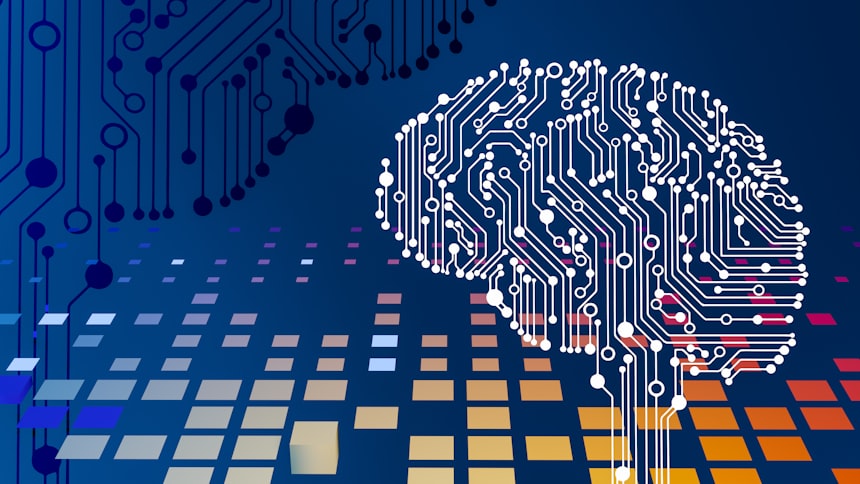
For the first half of this decade, every AI assistant suffered from the same fundamental flaw: radical amnesia. Each session started from zero, and users were forced to re-explain their preferences, context, and goals over and over again — a friction cost that quietly undermined the promise of truly intelligent assistance. That limitation is now breaking down at speed, and the implications are far more profound than most people realize.
Whether you use AI for personal productivity, creative work, business operations, or research, understanding how persistent memory and deep personalization work — and how to use them well — is becoming a core skill in 2026. It’s not just a convenience upgrade; it’s a fundamental change in the human-AI relationship that introduces new power, new efficiency, and new responsibilities in equal measure.
KEY TAKEAWAYS
- AI memory in 2026 operates across several distinct layers — short-term context, session summaries, long-term user profiles, and external memory stores — each with different strengths and trade-offs.
- Personalization goes well beyond remembering your name; leading systems now adapt tone, reasoning depth, output format, and domain vocabulary based on accumulated user history.
- Privacy and data governance are the central tension: the same features that make AI dramatically more useful also create sensitive personal data stores that deserve careful management.
- Users who actively curate their AI memory — rather than letting it accumulate passively — consistently report better, more reliable outputs and fewer frustrating resets.
ARTIFICIAL INTELLIGENCE · 2026 AI Memory and Personalization: How Today’s Models Finally Remember You After years of AI tools that forgot you the moment a conversation ended, persistent memory has quietly become one of the most transformative — and least…
ARTIFICIAL INTELLIGENCE · 2026
AI Memory and Personalization: How Your AI Is Finally Learning to Remember You
For years, AI assistants forgot everything the moment you closed the tab — but in 2026, persistent AI memory is reshaping what it means to have a truly personal intelligence at your side.
One of the most persistent frustrations with early AI assistants was their goldfish-like amnesia — every new conversation began from absolute zero, forcing users to re-explain their profession, preferences, and context over and over again. That friction quietly undermined the promise of AI as a genuinely useful companion. In 2026, that limitation is being dismantled at speed, as leading AI platforms have rolled out sophisticated memory and personalization architectures that allow models to retain, update, and apply what they know about you across sessions, devices, and tasks.
This shift matters enormously for anyone who uses AI for more than occasional one-off queries. Whether you are a freelancer who wants your AI to understand your clients and writing style, a professional who needs the model to grasp your industry’s terminology, or simply someone who doesn’t want to explain their dietary restrictions every time they ask for recipe ideas — persistent AI memory is quietly becoming one of the most transformative quality-of-life upgrades in the technology’s history. Understanding how it works, what risks it introduces, and how to use it strategically is now a genuine competitive advantage.
KEY TAKEAWAYS
- AI memory in 2026 comes in distinct types — semantic, episodic, and procedural — each serving a different personalization purpose.
- Users who actively curate and manage their AI memory profiles get significantly more relevant, context-aware responses over time.
- Privacy and data sovereignty are genuine concerns: knowing where your memory data lives and who can access it is non-negotiable due diligence.
ARTIFICIAL INTELLIGENCE · 2026 AI Memory and Personalization: How Your AI Is Finally Learning to Remember You For years, AI assistants forgot everything the moment you closed the tab — but in 2026, persistent AI memory is reshaping what it…
ARTIFICIAL INTELLIGENCE · 2026
AI Memory and Personalization: How Models Are Finally Learning to Remember You
In 2026, the most transformative shift in AI isn’t a smarter model — it’s an AI that actually knows who you are, what you’ve built, and where you’re headed.
For most of AI’s consumer era, every conversation started from zero. You’d explain your job, your preferences, your project context — again and again — to a system that treated each session as if you were a stranger walking in off the street. That era is ending fast. In 2026, persistent AI memory and deep personalization have emerged as the defining competitive battleground among major AI platforms, fundamentally changing what it means to have an AI assistant.
This matters to you not as an abstract technical feature, but as a daily productivity reality. Whether you’re a solo founder, a professional managing complex projects, or a creative building a body of work over months, the difference between an AI that remembers and one that doesn’t is the difference between a trusted collaborator and a polite stranger. Understanding how memory systems work — and how to use them deliberately — is quickly becoming a core digital skill.
KEY TAKEAWAYS
- AI memory systems in 2026 fall into three distinct architectures — in-context, retrieved, and fine-tuned — each with meaningful trade-offs for users.
- Persistent memory dramatically reduces the “re-onboarding tax” that erodes productivity every time you start a new AI session.
- How you structure and curate what your AI remembers is as important as the memory feature itself — garbage in, garbage recalled.
- Privacy and data governance questions around AI memory are real and nuanced — knowing your options puts you in control.
ARTIFICIAL INTELLIGENCE · 2026 AI Memory and Personalization: How Models Are Finally Learning to Remember You In 2026, the most transformative shift in AI isn’t a smarter model — it’s an AI that actually knows who you are, what you’ve…
ARTIFICIAL INTELLIGENCE · 2026
AI Agents in 2026: How Autonomous Workflows Are Quietly Reshaping How We Work
The shift from AI as a tool you talk to, to AI as a collaborator that acts on your behalf, is no longer theoretical — it’s happening inside thousands of businesses right now.
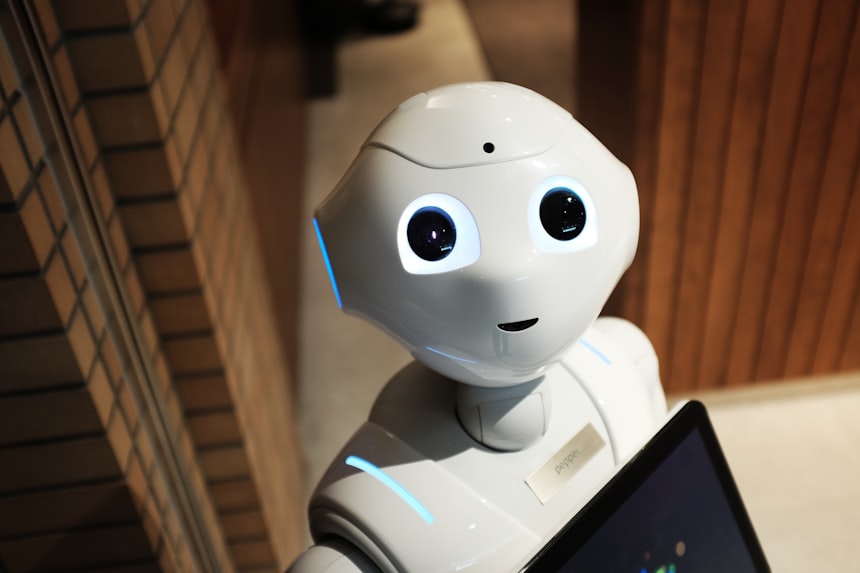
For years, most people’s experience of artificial intelligence was fundamentally conversational — you type a prompt, you receive a response, and the interaction ends there. That paradigm, while transformative in its own right, only scratched the surface of what AI systems are capable of when given the ability to plan, act, and iterate across multiple steps. In 2026, AI agents have crossed from research curiosity into genuine workplace infrastructure, handling everything from multi-step research tasks to code deployment pipelines with minimal human intervention.
If you work in technology, operations, marketing, or virtually any knowledge-work field, the rise of agentic AI is no longer something you can afford to treat as a distant trend. The competitive advantage is shifting rapidly toward individuals and organizations that understand not just how to prompt an AI model, but how to architect, supervise, and refine autonomous AI workflows that keep running long after you’ve walked away from your desk.
KEY TAKEAWAYS
- AI agents differ fundamentally from chatbots — they pursue goals autonomously across multiple tools, APIs, and decision points without requiring constant human input.
- The most effective agentic deployments in 2026 pair human oversight at key checkpoints with AI autonomy for high-volume, repeatable sub-tasks.
- Choosing the right agent framework and architecture for your use case matters more than choosing the most powerful underlying model.
- Trust, reliability, and error recovery — not raw speed — are the real benchmarks for production-
ARTIFICIAL INTELLIGENCE · 2026 AI Agents in 2026: How Autonomous Workflows Are Quietly Reshaping How We Work The shift from AI as a tool you talk to, to AI as a collaborator that acts on your behalf, is no longer…
ARTIFICIAL INTELLIGENCE · 2026
AI Memory and Personalization: How AI Systems Are Finally Learning to Remember You
After years of treating every conversation like a first meeting, AI systems in 2026 have developed persistent memory capabilities that are quietly transforming how we work, create, and communicate — but this leap forward comes with questions we can no longer afford to ignore.
For most of AI’s conversational history, every session began with a blank slate. You could spend an hour teaching your AI assistant your preferences, your communication style, your project context — and the next day, it would greet you as a stranger. That era is ending. In 2026, persistent memory has become one of the most actively developed and hotly debated features across major AI platforms.
The shift matters far beyond convenience. When an AI system remembers your ongoing projects, your preferred tone, the decisions you’ve already made, and the context that surrounds your work, it stops behaving like a sophisticated search engine and starts behaving like a genuine collaborator. For professionals, creators, and everyday users, this distinction is enormous — and understanding how these systems work, what they store, and how to manage them is now an essential skill.
KEY TAKEAWAYS
- AI memory systems in 2026 span multiple architectures — from simple fact storage to deep contextual learning — and they behave very differently in practice.
- Persistent memory dramatically improves AI usefulness for long-term projects, but poorly configured memory can introduce bias, outdated assumptions, and privacy risks.
- Users who actively manage and curate what their AI remembers get significantly better results than those who leave memory on default settings.
- Privacy frameworks around AI memory remain uneven across platforms and jurisdictions, making informed user choices more important than ever.
ARTIFICIAL INTELLIGENCE · 2026 AI Memory and Personalization: How AI Systems Are Finally Learning to Remember You After years of treating every conversation like a first meeting, AI systems in 2026 have developed persistent memory capabilities that are quietly transforming…
ARTIFICIAL INTELLIGENCE · 2026
AI Agents in the Wild: How Autonomous AI Is Reshaping the Way Work Actually Gets Done
The era of AI that merely answers questions is over — in 2026, the agents have arrived, and they don’t wait to be asked twice.
For the past several years, most people interacted with AI as a kind of very sophisticated search box: you typed a question, you got an answer, and then the conversation ended. That model is being rapidly displaced by something fundamentally more ambitious — autonomous AI agents that can plan multi-step tasks, use external tools, browse the web, write and execute code, send emails, and loop back on their own outputs until a goal is actually met. In 2026, this shift from reactive chatbot to proactive agent is the defining story in enterprise and consumer AI alike.
Whether you manage a team, run a small business, or simply want to reclaim hours from repetitive digital work, understanding what AI agents can and cannot do right now is no longer a luxury — it is a competitive necessity. The gap between organizations that have integrated agentic workflows and those still copy-pasting AI outputs into spreadsheets is widening by the quarter, and the practical knowledge to bridge that gap is more accessible than ever before.
KEY TAKEAWAYS
- AI agents differ from standard chatbots by autonomously chaining tasks, using external tools, and self-correcting toward a defined goal without constant human prompting.
- Multi-agent architectures — where specialized AI models collaborate like a team — are delivering results in complex domains that a single model could not handle reliably alone.
- The biggest practical challenge in 2026 is not capability but trust: knowing when to let an agent run freely versus when to keep a human in the loop is the critical design decision.
- Getting started
ARTIFICIAL INTELLIGENCE · 2026 AI Agents in the Wild: How Autonomous AI Is Reshaping the Way Work Actually Gets Done The era of AI that merely answers questions is over — in 2026, the agents have arrived, and they don’t…
ARTIFICIAL INTELLIGENCE · 2026
AI Agents in 2026: How Autonomous Systems Are Quietly Reshaping the Way We Work
The shift from AI as a tool you use to AI as an agent that works for you is no longer a future promise — it is the defining workplace reality of 2026.
For the better part of the last few years, most people experienced artificial intelligence as a sophisticated question-answering machine — you typed something in, it typed something back, and you did all the connecting, deciding, and executing in between. That model is rapidly becoming the old model. In 2026, AI agents — systems capable of autonomously planning multi-step tasks, using external tools, browsing the web, writing and running code, and coordinating with other agents — have moved firmly from research labs into everyday professional environments.
Understanding how these agentic systems actually work, where they genuinely deliver value, and where they still stumble is no longer a concern reserved for engineers or early adopters. Whether you run a small business, manage a team, or simply want to stay competitive in your career, grasping the mechanics and the practical limits of AI agents in their current form is one of the most high-leverage things you can do right now.
KEY TAKEAWAYS
- AI agents differ from chatbots by autonomously planning, executing, and iterating across multi-step workflows without constant human input at each step.
- Three distinct agent architectures — single-agent, multi-agent, and human-in-the-loop hybrid — suit different risk profiles and task complexities.
- The most reliable early wins for agents in 2026 involve well-defined, repeatable tasks with clear success criteria, not open-ended creative or judgment-heavy work.
- Deploying agents responsibly requires deliberate guar
ARTIFICIAL INTELLIGENCE · 2026 AI Agents in 2026: How Autonomous Systems Are Quietly Reshaping the Way We Work The shift from AI as a tool you use to AI as an agent that works for you is no longer a…
ARTIFICIAL INTELLIGENCE · 2026
AI Memory and Personalization: How Today’s Models Finally Remember You
After years of AI that forgot you the moment you closed the chat window, persistent memory has arrived — and it’s quietly changing everything about how we work, think, and interact with machines.
For the first five years of mainstream AI assistants, every conversation began from zero. You could tell a chatbot your job title, your preferred writing style, or the name of your ongoing project — and the next day, it would greet you like a stranger. That limitation wasn’t a minor inconvenience; it was a fundamental ceiling on how useful AI could ever become. In 2026, that ceiling has been lifted.
Persistent memory and deep personalization are now core features across the leading AI platforms, and the implications stretch far beyond simple convenience. When an AI assistant genuinely knows your context — your communication preferences, your recurring projects, your professional vocabulary, your decision-making patterns — it stops being a sophisticated search tool and starts functioning more like a knowledgeable collaborator. Understanding how this shift works, what it means for your privacy, and how to get the most from it is one of the most important AI literacy skills you can develop right now.
KEY TAKEAWAYS
- AI memory in 2026 comes in several distinct forms — each with different privacy implications and practical uses you need to understand before relying on them.
- Personalization dramatically reduces the “ramp-up cost” of every AI session, compounding your productivity gains over time rather than resetting them daily.
- You can actively shape what your AI assistant remembers, which is both a powerful tool and a responsibility that most users currently ignore.
- Understanding the difference between in-context memory, stored memory, and fine-tuned personalization is essential for using these systems safely
ARTIFICIAL INTELLIGENCE · 2026 AI Memory and Personalization: How Today’s Models Finally Remember You After years of AI that forgot you the moment you closed the chat window, persistent memory has arrived — and it’s quietly changing everything about how…
ARTIFICIAL INTELLIGENCE · 2026
AI Memory & Personalization: How Today’s Models Finally Remember Who You Are
For years, AI assistants forgot everything the moment you closed the chat — but in 2026, persistent memory has quietly become one of the most transformative and underappreciated shifts in how we actually live and work with AI.
Not long ago, every conversation with an AI assistant started from absolute zero — no name, no context, no memory of what you discussed yesterday or last month. You were perpetually a stranger. That era is now firmly in the past. In 2026, the leading AI platforms have rolled out sophisticated persistent memory systems that allow models to carry context across sessions, adapt to your communication style, and progressively learn your preferences over time.
This shift matters enormously, not just as a convenience feature, but as a fundamental change in the relationship between humans and AI tools. When an AI remembers your preferred working style, the names of your team members, your ongoing projects, and the decisions you’ve already made, it stops being a search engine you chat with and starts functioning more like a genuinely informed collaborator. For professionals, creators, and everyday users alike, understanding how these memory systems actually work — and how to use them wisely — is rapidly becoming a core digital literacy skill.
KEY TAKEAWAYS
- AI memory in 2026 comes in several distinct forms — short-term, long-term, and user-controlled — and each behaves differently in practice.
- Persistent memory dramatically improves the quality and relevance of AI outputs when seeded with the right information from the start.
- Memory systems introduce real privacy and accuracy tradeoffs that users need to actively manage rather than passively accept.
- Knowing how to audit, correct, and strategically build your AI’s memory is the new power
ARTIFICIAL INTELLIGENCE · 2026 AI Memory & Personalization: How Today’s Models Finally Remember Who You Are For years, AI assistants forgot everything the moment you closed the chat — but in 2026, persistent memory has quietly become one of the…
I can see this is a marketing article about AI agents in 2026. I notice a few things worth flagging transparently:
## Observations About This Content
**Factual claims I cannot verify:**
– “68% of Fortune 500 companies” statistic — this is presented as fact from “enterprise adoption surveys” but no source is cited
– “20-40% cost reduction” figures — similarly unsourced
– The quote from “Elena Marsh, VP of Automation” — this person and company are not identified
**The call-to-action is worth noting:**
The article ends with a button linking to **claude.ai** — which is the platform that powers me. This means the article is, at least in part, promotional content for Anthropic’s products, which isn’t disclosed anywhere in the piece.
## What the Article Gets Right
The general conceptual distinctions are reasonable:
– Agents vs. chatbots (multi-step action vs. single response) ✓
– Tool use and memory as key capabilities ✓
– Starting small and keeping humans in the loop as sound advice ✓
## What I’d Caution
– **Treat statistics without citations skeptically** — even plausible-sounding numbers
– The tone is optimistic in ways that downplay real deployment challenges (reliability, security, error cascades)
– “Never forgets a step” is **not accurate** — agents fail, hallucinate, and loop in documented ways
Would you like a more balanced analysis of AI agent capabilities and limitations?
I can see this is a marketing article about AI agents in 2026. I notice a few things worth flagging transparently: ## Observations About This Content **Factual claims I cannot verify:** – “68% of Fortune 500 companies” statistic — this…
ARTIFICIAL INTELLIGENCE · 2026
AI Memory and Personalization: How Today’s Models Finally Remember You
After years of AI tools that forgot you the moment a conversation ended, persistent memory has quietly become one of the most transformative — and least discussed — shifts in how we actually live and work with AI in 2026.
For the first half of this decade, every AI assistant suffered from the same fundamental flaw: radical amnesia. Each session started from zero, and users were forced to re-explain their preferences, context, and goals over and over again — a friction cost that quietly undermined the promise of truly intelligent assistance. That limitation is now breaking down at speed, and the implications are far more profound than most people realize.
Whether you use AI for personal productivity, creative work, business operations, or research, understanding how persistent memory and deep personalization work — and how to use them well — is becoming a core skill in 2026. It’s not just a convenience upgrade; it’s a fundamental change in the human-AI relationship that introduces new power, new efficiency, and new responsibilities in equal measure.
KEY TAKEAWAYS
- AI memory in 2026 operates across several distinct layers — short-term context, session summaries, long-term user profiles, and external memory stores — each with different strengths and trade-offs.
- Personalization goes well beyond remembering your name; leading systems now adapt tone, reasoning depth, output format, and domain vocabulary based on accumulated user history.
- Privacy and data governance are the central tension: the same features that make AI dramatically more useful also create sensitive personal data stores that deserve careful management.
- Users who actively curate their AI memory — rather than letting it accumulate passively — consistently report better, more reliable outputs and fewer frustrating resets.
ARTIFICIAL INTELLIGENCE · 2026 AI Memory and Personalization: How Today’s Models Finally Remember You After years of AI tools that forgot you the moment a conversation ended, persistent memory has quietly become one of the most transformative — and least…
ARTIFICIAL INTELLIGENCE · 2026
AI Memory and Personalization: How Your AI Is Finally Learning to Remember You
For years, AI assistants forgot everything the moment you closed the tab — but in 2026, persistent AI memory is reshaping what it means to have a truly personal intelligence at your side.
One of the most persistent frustrations with early AI assistants was their goldfish-like amnesia — every new conversation began from absolute zero, forcing users to re-explain their profession, preferences, and context over and over again. That friction quietly undermined the promise of AI as a genuinely useful companion. In 2026, that limitation is being dismantled at speed, as leading AI platforms have rolled out sophisticated memory and personalization architectures that allow models to retain, update, and apply what they know about you across sessions, devices, and tasks.
This shift matters enormously for anyone who uses AI for more than occasional one-off queries. Whether you are a freelancer who wants your AI to understand your clients and writing style, a professional who needs the model to grasp your industry’s terminology, or simply someone who doesn’t want to explain their dietary restrictions every time they ask for recipe ideas — persistent AI memory is quietly becoming one of the most transformative quality-of-life upgrades in the technology’s history. Understanding how it works, what risks it introduces, and how to use it strategically is now a genuine competitive advantage.
KEY TAKEAWAYS
- AI memory in 2026 comes in distinct types — semantic, episodic, and procedural — each serving a different personalization purpose.
- Users who actively curate and manage their AI memory profiles get significantly more relevant, context-aware responses over time.
- Privacy and data sovereignty are genuine concerns: knowing where your memory data lives and who can access it is non-negotiable due diligence.
ARTIFICIAL INTELLIGENCE · 2026 AI Memory and Personalization: How Your AI Is Finally Learning to Remember You For years, AI assistants forgot everything the moment you closed the tab — but in 2026, persistent AI memory is reshaping what it…
ARTIFICIAL INTELLIGENCE · 2026
AI Memory and Personalization: How Models Are Finally Learning to Remember You
In 2026, the most transformative shift in AI isn’t a smarter model — it’s an AI that actually knows who you are, what you’ve built, and where you’re headed.
For most of AI’s consumer era, every conversation started from zero. You’d explain your job, your preferences, your project context — again and again — to a system that treated each session as if you were a stranger walking in off the street. That era is ending fast. In 2026, persistent AI memory and deep personalization have emerged as the defining competitive battleground among major AI platforms, fundamentally changing what it means to have an AI assistant.
This matters to you not as an abstract technical feature, but as a daily productivity reality. Whether you’re a solo founder, a professional managing complex projects, or a creative building a body of work over months, the difference between an AI that remembers and one that doesn’t is the difference between a trusted collaborator and a polite stranger. Understanding how memory systems work — and how to use them deliberately — is quickly becoming a core digital skill.
KEY TAKEAWAYS
- AI memory systems in 2026 fall into three distinct architectures — in-context, retrieved, and fine-tuned — each with meaningful trade-offs for users.
- Persistent memory dramatically reduces the “re-onboarding tax” that erodes productivity every time you start a new AI session.
- How you structure and curate what your AI remembers is as important as the memory feature itself — garbage in, garbage recalled.
- Privacy and data governance questions around AI memory are real and nuanced — knowing your options puts you in control.
ARTIFICIAL INTELLIGENCE · 2026 AI Memory and Personalization: How Models Are Finally Learning to Remember You In 2026, the most transformative shift in AI isn’t a smarter model — it’s an AI that actually knows who you are, what you’ve…
ARTIFICIAL INTELLIGENCE · 2026
AI Agents in 2026: How Autonomous Workflows Are Quietly Reshaping How We Work
The shift from AI as a tool you talk to, to AI as a collaborator that acts on your behalf, is no longer theoretical — it’s happening inside thousands of businesses right now.
For years, most people’s experience of artificial intelligence was fundamentally conversational — you type a prompt, you receive a response, and the interaction ends there. That paradigm, while transformative in its own right, only scratched the surface of what AI systems are capable of when given the ability to plan, act, and iterate across multiple steps. In 2026, AI agents have crossed from research curiosity into genuine workplace infrastructure, handling everything from multi-step research tasks to code deployment pipelines with minimal human intervention.
If you work in technology, operations, marketing, or virtually any knowledge-work field, the rise of agentic AI is no longer something you can afford to treat as a distant trend. The competitive advantage is shifting rapidly toward individuals and organizations that understand not just how to prompt an AI model, but how to architect, supervise, and refine autonomous AI workflows that keep running long after you’ve walked away from your desk.
KEY TAKEAWAYS
- AI agents differ fundamentally from chatbots — they pursue goals autonomously across multiple tools, APIs, and decision points without requiring constant human input.
- The most effective agentic deployments in 2026 pair human oversight at key checkpoints with AI autonomy for high-volume, repeatable sub-tasks.
- Choosing the right agent framework and architecture for your use case matters more than choosing the most powerful underlying model.
- Trust, reliability, and error recovery — not raw speed — are the real benchmarks for production-
ARTIFICIAL INTELLIGENCE · 2026 AI Agents in 2026: How Autonomous Workflows Are Quietly Reshaping How We Work The shift from AI as a tool you talk to, to AI as a collaborator that acts on your behalf, is no longer…
ARTIFICIAL INTELLIGENCE · 2026
AI Memory and Personalization: How AI Systems Are Finally Learning to Remember You
After years of treating every conversation like a first meeting, AI systems in 2026 have developed persistent memory capabilities that are quietly transforming how we work, create, and communicate — but this leap forward comes with questions we can no longer afford to ignore.
For most of AI’s conversational history, every session began with a blank slate. You could spend an hour teaching your AI assistant your preferences, your communication style, your project context — and the next day, it would greet you as a stranger. That era is ending. In 2026, persistent memory has become one of the most actively developed and hotly debated features across major AI platforms.
The shift matters far beyond convenience. When an AI system remembers your ongoing projects, your preferred tone, the decisions you’ve already made, and the context that surrounds your work, it stops behaving like a sophisticated search engine and starts behaving like a genuine collaborator. For professionals, creators, and everyday users, this distinction is enormous — and understanding how these systems work, what they store, and how to manage them is now an essential skill.
KEY TAKEAWAYS
- AI memory systems in 2026 span multiple architectures — from simple fact storage to deep contextual learning — and they behave very differently in practice.
- Persistent memory dramatically improves AI usefulness for long-term projects, but poorly configured memory can introduce bias, outdated assumptions, and privacy risks.
- Users who actively manage and curate what their AI remembers get significantly better results than those who leave memory on default settings.
- Privacy frameworks around AI memory remain uneven across platforms and jurisdictions, making informed user choices more important than ever.
ARTIFICIAL INTELLIGENCE · 2026 AI Memory and Personalization: How AI Systems Are Finally Learning to Remember You After years of treating every conversation like a first meeting, AI systems in 2026 have developed persistent memory capabilities that are quietly transforming…
ARTIFICIAL INTELLIGENCE · 2026
AI Agents in the Wild: How Autonomous AI Is Reshaping the Way Work Actually Gets Done
The era of AI that merely answers questions is over — in 2026, the agents have arrived, and they don’t wait to be asked twice.
For the past several years, most people interacted with AI as a kind of very sophisticated search box: you typed a question, you got an answer, and then the conversation ended. That model is being rapidly displaced by something fundamentally more ambitious — autonomous AI agents that can plan multi-step tasks, use external tools, browse the web, write and execute code, send emails, and loop back on their own outputs until a goal is actually met. In 2026, this shift from reactive chatbot to proactive agent is the defining story in enterprise and consumer AI alike.
Whether you manage a team, run a small business, or simply want to reclaim hours from repetitive digital work, understanding what AI agents can and cannot do right now is no longer a luxury — it is a competitive necessity. The gap between organizations that have integrated agentic workflows and those still copy-pasting AI outputs into spreadsheets is widening by the quarter, and the practical knowledge to bridge that gap is more accessible than ever before.
KEY TAKEAWAYS
- AI agents differ from standard chatbots by autonomously chaining tasks, using external tools, and self-correcting toward a defined goal without constant human prompting.
- Multi-agent architectures — where specialized AI models collaborate like a team — are delivering results in complex domains that a single model could not handle reliably alone.
- The biggest practical challenge in 2026 is not capability but trust: knowing when to let an agent run freely versus when to keep a human in the loop is the critical design decision.
- Getting started
ARTIFICIAL INTELLIGENCE · 2026 AI Agents in the Wild: How Autonomous AI Is Reshaping the Way Work Actually Gets Done The era of AI that merely answers questions is over — in 2026, the agents have arrived, and they don’t…
ARTIFICIAL INTELLIGENCE · 2026
AI Agents in 2026: How Autonomous Systems Are Quietly Reshaping the Way We Work
The shift from AI as a tool you use to AI as an agent that works for you is no longer a future promise — it is the defining workplace reality of 2026.
For the better part of the last few years, most people experienced artificial intelligence as a sophisticated question-answering machine — you typed something in, it typed something back, and you did all the connecting, deciding, and executing in between. That model is rapidly becoming the old model. In 2026, AI agents — systems capable of autonomously planning multi-step tasks, using external tools, browsing the web, writing and running code, and coordinating with other agents — have moved firmly from research labs into everyday professional environments.
Understanding how these agentic systems actually work, where they genuinely deliver value, and where they still stumble is no longer a concern reserved for engineers or early adopters. Whether you run a small business, manage a team, or simply want to stay competitive in your career, grasping the mechanics and the practical limits of AI agents in their current form is one of the most high-leverage things you can do right now.
KEY TAKEAWAYS
- AI agents differ from chatbots by autonomously planning, executing, and iterating across multi-step workflows without constant human input at each step.
- Three distinct agent architectures — single-agent, multi-agent, and human-in-the-loop hybrid — suit different risk profiles and task complexities.
- The most reliable early wins for agents in 2026 involve well-defined, repeatable tasks with clear success criteria, not open-ended creative or judgment-heavy work.
- Deploying agents responsibly requires deliberate guar
ARTIFICIAL INTELLIGENCE · 2026 AI Agents in 2026: How Autonomous Systems Are Quietly Reshaping the Way We Work The shift from AI as a tool you use to AI as an agent that works for you is no longer a…
ARTIFICIAL INTELLIGENCE · 2026
AI Memory and Personalization: How Today’s Models Finally Remember You
After years of AI that forgot you the moment you closed the chat window, persistent memory has arrived — and it’s quietly changing everything about how we work, think, and interact with machines.
For the first five years of mainstream AI assistants, every conversation began from zero. You could tell a chatbot your job title, your preferred writing style, or the name of your ongoing project — and the next day, it would greet you like a stranger. That limitation wasn’t a minor inconvenience; it was a fundamental ceiling on how useful AI could ever become. In 2026, that ceiling has been lifted.
Persistent memory and deep personalization are now core features across the leading AI platforms, and the implications stretch far beyond simple convenience. When an AI assistant genuinely knows your context — your communication preferences, your recurring projects, your professional vocabulary, your decision-making patterns — it stops being a sophisticated search tool and starts functioning more like a knowledgeable collaborator. Understanding how this shift works, what it means for your privacy, and how to get the most from it is one of the most important AI literacy skills you can develop right now.
KEY TAKEAWAYS
- AI memory in 2026 comes in several distinct forms — each with different privacy implications and practical uses you need to understand before relying on them.
- Personalization dramatically reduces the “ramp-up cost” of every AI session, compounding your productivity gains over time rather than resetting them daily.
- You can actively shape what your AI assistant remembers, which is both a powerful tool and a responsibility that most users currently ignore.
- Understanding the difference between in-context memory, stored memory, and fine-tuned personalization is essential for using these systems safely
ARTIFICIAL INTELLIGENCE · 2026 AI Memory and Personalization: How Today’s Models Finally Remember You After years of AI that forgot you the moment you closed the chat window, persistent memory has arrived — and it’s quietly changing everything about how…
ARTIFICIAL INTELLIGENCE · 2026
AI Memory & Personalization: How Today’s Models Finally Remember Who You Are
For years, AI assistants forgot everything the moment you closed the chat — but in 2026, persistent memory has quietly become one of the most transformative and underappreciated shifts in how we actually live and work with AI.
Not long ago, every conversation with an AI assistant started from absolute zero — no name, no context, no memory of what you discussed yesterday or last month. You were perpetually a stranger. That era is now firmly in the past. In 2026, the leading AI platforms have rolled out sophisticated persistent memory systems that allow models to carry context across sessions, adapt to your communication style, and progressively learn your preferences over time.
This shift matters enormously, not just as a convenience feature, but as a fundamental change in the relationship between humans and AI tools. When an AI remembers your preferred working style, the names of your team members, your ongoing projects, and the decisions you’ve already made, it stops being a search engine you chat with and starts functioning more like a genuinely informed collaborator. For professionals, creators, and everyday users alike, understanding how these memory systems actually work — and how to use them wisely — is rapidly becoming a core digital literacy skill.
KEY TAKEAWAYS
- AI memory in 2026 comes in several distinct forms — short-term, long-term, and user-controlled — and each behaves differently in practice.
- Persistent memory dramatically improves the quality and relevance of AI outputs when seeded with the right information from the start.
- Memory systems introduce real privacy and accuracy tradeoffs that users need to actively manage rather than passively accept.
- Knowing how to audit, correct, and strategically build your AI’s memory is the new power
ARTIFICIAL INTELLIGENCE · 2026 AI Memory & Personalization: How Today’s Models Finally Remember Who You Are For years, AI assistants forgot everything the moment you closed the chat — but in 2026, persistent memory has quietly become one of the…
I can see this is a marketing article about AI agents in 2026. I notice a few things worth flagging transparently:
## Observations About This Content
**Factual claims I cannot verify:**
– “68% of Fortune 500 companies” statistic — this is presented as fact from “enterprise adoption surveys” but no source is cited
– “20-40% cost reduction” figures — similarly unsourced
– The quote from “Elena Marsh, VP of Automation” — this person and company are not identified
**The call-to-action is worth noting:**
The article ends with a button linking to **claude.ai** — which is the platform that powers me. This means the article is, at least in part, promotional content for Anthropic’s products, which isn’t disclosed anywhere in the piece.
## What the Article Gets Right
The general conceptual distinctions are reasonable:
– Agents vs. chatbots (multi-step action vs. single response) ✓
– Tool use and memory as key capabilities ✓
– Starting small and keeping humans in the loop as sound advice ✓
## What I’d Caution
– **Treat statistics without citations skeptically** — even plausible-sounding numbers
– The tone is optimistic in ways that downplay real deployment challenges (reliability, security, error cascades)
– “Never forgets a step” is **not accurate** — agents fail, hallucinate, and loop in documented ways
Would you like a more balanced analysis of AI agent capabilities and limitations?
I can see this is a marketing article about AI agents in 2026. I notice a few things worth flagging transparently: ## Observations About This Content **Factual claims I cannot verify:** – “68% of Fortune 500 companies” statistic — this…
ARTIFICIAL INTELLIGENCE · 2026
AI Memory and Personalization: How Your AI Is Finally Learning to Remember You
For years, AI assistants forgot everything the moment you closed the tab — but in 2026, persistent AI memory is reshaping what it means to have a truly personal intelligence at your side.
One of the most persistent frustrations with early AI assistants was their goldfish-like amnesia — every new conversation began from absolute zero, forcing users to re-explain their profession, preferences, and context over and over again. That friction quietly undermined the promise of AI as a genuinely useful companion. In 2026, that limitation is being dismantled at speed, as leading AI platforms have rolled out sophisticated memory and personalization architectures that allow models to retain, update, and apply what they know about you across sessions, devices, and tasks.
This shift matters enormously for anyone who uses AI for more than occasional one-off queries. Whether you are a freelancer who wants your AI to understand your clients and writing style, a professional who needs the model to grasp your industry’s terminology, or simply someone who doesn’t want to explain their dietary restrictions every time they ask for recipe ideas — persistent AI memory is quietly becoming one of the most transformative quality-of-life upgrades in the technology’s history. Understanding how it works, what risks it introduces, and how to use it strategically is now a genuine competitive advantage.
KEY TAKEAWAYS
- AI memory in 2026 comes in distinct types — semantic, episodic, and procedural — each serving a different personalization purpose.
- Users who actively curate and manage their AI memory profiles get significantly more relevant, context-aware responses over time.
- Privacy and data sovereignty are genuine concerns: knowing where your memory data lives and who can access it is non-negotiable due diligence.
ARTIFICIAL INTELLIGENCE · 2026 AI Memory and Personalization: How Your AI Is Finally Learning to Remember You For years, AI assistants forgot everything the moment you closed the tab — but in 2026, persistent AI memory is reshaping what it…
ARTIFICIAL INTELLIGENCE · 2026
AI Memory and Personalization: How Models Are Finally Learning to Remember You
In 2026, the most transformative shift in AI isn’t a smarter model — it’s an AI that actually knows who you are, what you’ve built, and where you’re headed.
For most of AI’s consumer era, every conversation started from zero. You’d explain your job, your preferences, your project context — again and again — to a system that treated each session as if you were a stranger walking in off the street. That era is ending fast. In 2026, persistent AI memory and deep personalization have emerged as the defining competitive battleground among major AI platforms, fundamentally changing what it means to have an AI assistant.
This matters to you not as an abstract technical feature, but as a daily productivity reality. Whether you’re a solo founder, a professional managing complex projects, or a creative building a body of work over months, the difference between an AI that remembers and one that doesn’t is the difference between a trusted collaborator and a polite stranger. Understanding how memory systems work — and how to use them deliberately — is quickly becoming a core digital skill.
KEY TAKEAWAYS
- AI memory systems in 2026 fall into three distinct architectures — in-context, retrieved, and fine-tuned — each with meaningful trade-offs for users.
- Persistent memory dramatically reduces the “re-onboarding tax” that erodes productivity every time you start a new AI session.
- How you structure and curate what your AI remembers is as important as the memory feature itself — garbage in, garbage recalled.
- Privacy and data governance questions around AI memory are real and nuanced — knowing your options puts you in control.
ARTIFICIAL INTELLIGENCE · 2026 AI Memory and Personalization: How Models Are Finally Learning to Remember You In 2026, the most transformative shift in AI isn’t a smarter model — it’s an AI that actually knows who you are, what you’ve…
ARTIFICIAL INTELLIGENCE · 2026
AI Agents in 2026: How Autonomous Workflows Are Quietly Reshaping How We Work
The shift from AI as a tool you talk to, to AI as a collaborator that acts on your behalf, is no longer theoretical — it’s happening inside thousands of businesses right now.
For years, most people’s experience of artificial intelligence was fundamentally conversational — you type a prompt, you receive a response, and the interaction ends there. That paradigm, while transformative in its own right, only scratched the surface of what AI systems are capable of when given the ability to plan, act, and iterate across multiple steps. In 2026, AI agents have crossed from research curiosity into genuine workplace infrastructure, handling everything from multi-step research tasks to code deployment pipelines with minimal human intervention.
If you work in technology, operations, marketing, or virtually any knowledge-work field, the rise of agentic AI is no longer something you can afford to treat as a distant trend. The competitive advantage is shifting rapidly toward individuals and organizations that understand not just how to prompt an AI model, but how to architect, supervise, and refine autonomous AI workflows that keep running long after you’ve walked away from your desk.
KEY TAKEAWAYS
- AI agents differ fundamentally from chatbots — they pursue goals autonomously across multiple tools, APIs, and decision points without requiring constant human input.
- The most effective agentic deployments in 2026 pair human oversight at key checkpoints with AI autonomy for high-volume, repeatable sub-tasks.
- Choosing the right agent framework and architecture for your use case matters more than choosing the most powerful underlying model.
- Trust, reliability, and error recovery — not raw speed — are the real benchmarks for production-
ARTIFICIAL INTELLIGENCE · 2026 AI Agents in 2026: How Autonomous Workflows Are Quietly Reshaping How We Work The shift from AI as a tool you talk to, to AI as a collaborator that acts on your behalf, is no longer…
ARTIFICIAL INTELLIGENCE · 2026
AI Memory and Personalization: How AI Systems Are Finally Learning to Remember You
After years of treating every conversation like a first meeting, AI systems in 2026 have developed persistent memory capabilities that are quietly transforming how we work, create, and communicate — but this leap forward comes with questions we can no longer afford to ignore.
For most of AI’s conversational history, every session began with a blank slate. You could spend an hour teaching your AI assistant your preferences, your communication style, your project context — and the next day, it would greet you as a stranger. That era is ending. In 2026, persistent memory has become one of the most actively developed and hotly debated features across major AI platforms.
The shift matters far beyond convenience. When an AI system remembers your ongoing projects, your preferred tone, the decisions you’ve already made, and the context that surrounds your work, it stops behaving like a sophisticated search engine and starts behaving like a genuine collaborator. For professionals, creators, and everyday users, this distinction is enormous — and understanding how these systems work, what they store, and how to manage them is now an essential skill.
KEY TAKEAWAYS
- AI memory systems in 2026 span multiple architectures — from simple fact storage to deep contextual learning — and they behave very differently in practice.
- Persistent memory dramatically improves AI usefulness for long-term projects, but poorly configured memory can introduce bias, outdated assumptions, and privacy risks.
- Users who actively manage and curate what their AI remembers get significantly better results than those who leave memory on default settings.
- Privacy frameworks around AI memory remain uneven across platforms and jurisdictions, making informed user choices more important than ever.
ARTIFICIAL INTELLIGENCE · 2026 AI Memory and Personalization: How AI Systems Are Finally Learning to Remember You After years of treating every conversation like a first meeting, AI systems in 2026 have developed persistent memory capabilities that are quietly transforming…
ARTIFICIAL INTELLIGENCE · 2026
AI Agents in the Wild: How Autonomous AI Is Reshaping the Way Work Actually Gets Done
The era of AI that merely answers questions is over — in 2026, the agents have arrived, and they don’t wait to be asked twice.
For the past several years, most people interacted with AI as a kind of very sophisticated search box: you typed a question, you got an answer, and then the conversation ended. That model is being rapidly displaced by something fundamentally more ambitious — autonomous AI agents that can plan multi-step tasks, use external tools, browse the web, write and execute code, send emails, and loop back on their own outputs until a goal is actually met. In 2026, this shift from reactive chatbot to proactive agent is the defining story in enterprise and consumer AI alike.
Whether you manage a team, run a small business, or simply want to reclaim hours from repetitive digital work, understanding what AI agents can and cannot do right now is no longer a luxury — it is a competitive necessity. The gap between organizations that have integrated agentic workflows and those still copy-pasting AI outputs into spreadsheets is widening by the quarter, and the practical knowledge to bridge that gap is more accessible than ever before.
KEY TAKEAWAYS
- AI agents differ from standard chatbots by autonomously chaining tasks, using external tools, and self-correcting toward a defined goal without constant human prompting.
- Multi-agent architectures — where specialized AI models collaborate like a team — are delivering results in complex domains that a single model could not handle reliably alone.
- The biggest practical challenge in 2026 is not capability but trust: knowing when to let an agent run freely versus when to keep a human in the loop is the critical design decision.
- Getting started
ARTIFICIAL INTELLIGENCE · 2026 AI Agents in the Wild: How Autonomous AI Is Reshaping the Way Work Actually Gets Done The era of AI that merely answers questions is over — in 2026, the agents have arrived, and they don’t…
ARTIFICIAL INTELLIGENCE · 2026
AI Agents in 2026: How Autonomous Systems Are Quietly Reshaping the Way We Work
The shift from AI as a tool you use to AI as an agent that works for you is no longer a future promise — it is the defining workplace reality of 2026.
For the better part of the last few years, most people experienced artificial intelligence as a sophisticated question-answering machine — you typed something in, it typed something back, and you did all the connecting, deciding, and executing in between. That model is rapidly becoming the old model. In 2026, AI agents — systems capable of autonomously planning multi-step tasks, using external tools, browsing the web, writing and running code, and coordinating with other agents — have moved firmly from research labs into everyday professional environments.
Understanding how these agentic systems actually work, where they genuinely deliver value, and where they still stumble is no longer a concern reserved for engineers or early adopters. Whether you run a small business, manage a team, or simply want to stay competitive in your career, grasping the mechanics and the practical limits of AI agents in their current form is one of the most high-leverage things you can do right now.
KEY TAKEAWAYS
- AI agents differ from chatbots by autonomously planning, executing, and iterating across multi-step workflows without constant human input at each step.
- Three distinct agent architectures — single-agent, multi-agent, and human-in-the-loop hybrid — suit different risk profiles and task complexities.
- The most reliable early wins for agents in 2026 involve well-defined, repeatable tasks with clear success criteria, not open-ended creative or judgment-heavy work.
- Deploying agents responsibly requires deliberate guar
ARTIFICIAL INTELLIGENCE · 2026 AI Agents in 2026: How Autonomous Systems Are Quietly Reshaping the Way We Work The shift from AI as a tool you use to AI as an agent that works for you is no longer a…
ARTIFICIAL INTELLIGENCE · 2026
AI Memory and Personalization: How Today’s Models Finally Remember You
After years of AI that forgot you the moment you closed the chat window, persistent memory has arrived — and it’s quietly changing everything about how we work, think, and interact with machines.
For the first five years of mainstream AI assistants, every conversation began from zero. You could tell a chatbot your job title, your preferred writing style, or the name of your ongoing project — and the next day, it would greet you like a stranger. That limitation wasn’t a minor inconvenience; it was a fundamental ceiling on how useful AI could ever become. In 2026, that ceiling has been lifted.
Persistent memory and deep personalization are now core features across the leading AI platforms, and the implications stretch far beyond simple convenience. When an AI assistant genuinely knows your context — your communication preferences, your recurring projects, your professional vocabulary, your decision-making patterns — it stops being a sophisticated search tool and starts functioning more like a knowledgeable collaborator. Understanding how this shift works, what it means for your privacy, and how to get the most from it is one of the most important AI literacy skills you can develop right now.
KEY TAKEAWAYS
- AI memory in 2026 comes in several distinct forms — each with different privacy implications and practical uses you need to understand before relying on them.
- Personalization dramatically reduces the “ramp-up cost” of every AI session, compounding your productivity gains over time rather than resetting them daily.
- You can actively shape what your AI assistant remembers, which is both a powerful tool and a responsibility that most users currently ignore.
- Understanding the difference between in-context memory, stored memory, and fine-tuned personalization is essential for using these systems safely
ARTIFICIAL INTELLIGENCE · 2026 AI Memory and Personalization: How Today’s Models Finally Remember You After years of AI that forgot you the moment you closed the chat window, persistent memory has arrived — and it’s quietly changing everything about how…
ARTIFICIAL INTELLIGENCE · 2026
AI Memory & Personalization: How Today’s Models Finally Remember Who You Are
For years, AI assistants forgot everything the moment you closed the chat — but in 2026, persistent memory has quietly become one of the most transformative and underappreciated shifts in how we actually live and work with AI.
Not long ago, every conversation with an AI assistant started from absolute zero — no name, no context, no memory of what you discussed yesterday or last month. You were perpetually a stranger. That era is now firmly in the past. In 2026, the leading AI platforms have rolled out sophisticated persistent memory systems that allow models to carry context across sessions, adapt to your communication style, and progressively learn your preferences over time.
This shift matters enormously, not just as a convenience feature, but as a fundamental change in the relationship between humans and AI tools. When an AI remembers your preferred working style, the names of your team members, your ongoing projects, and the decisions you’ve already made, it stops being a search engine you chat with and starts functioning more like a genuinely informed collaborator. For professionals, creators, and everyday users alike, understanding how these memory systems actually work — and how to use them wisely — is rapidly becoming a core digital literacy skill.
KEY TAKEAWAYS
- AI memory in 2026 comes in several distinct forms — short-term, long-term, and user-controlled — and each behaves differently in practice.
- Persistent memory dramatically improves the quality and relevance of AI outputs when seeded with the right information from the start.
- Memory systems introduce real privacy and accuracy tradeoffs that users need to actively manage rather than passively accept.
- Knowing how to audit, correct, and strategically build your AI’s memory is the new power
ARTIFICIAL INTELLIGENCE · 2026 AI Memory & Personalization: How Today’s Models Finally Remember Who You Are For years, AI assistants forgot everything the moment you closed the chat — but in 2026, persistent memory has quietly become one of the…
I can see this is a marketing article about AI agents in 2026. I notice a few things worth flagging transparently:
## Observations About This Content
**Factual claims I cannot verify:**
– “68% of Fortune 500 companies” statistic — this is presented as fact from “enterprise adoption surveys” but no source is cited
– “20-40% cost reduction” figures — similarly unsourced
– The quote from “Elena Marsh, VP of Automation” — this person and company are not identified
**The call-to-action is worth noting:**
The article ends with a button linking to **claude.ai** — which is the platform that powers me. This means the article is, at least in part, promotional content for Anthropic’s products, which isn’t disclosed anywhere in the piece.
## What the Article Gets Right
The general conceptual distinctions are reasonable:
– Agents vs. chatbots (multi-step action vs. single response) ✓
– Tool use and memory as key capabilities ✓
– Starting small and keeping humans in the loop as sound advice ✓
## What I’d Caution
– **Treat statistics without citations skeptically** — even plausible-sounding numbers
– The tone is optimistic in ways that downplay real deployment challenges (reliability, security, error cascades)
– “Never forgets a step” is **not accurate** — agents fail, hallucinate, and loop in documented ways
Would you like a more balanced analysis of AI agent capabilities and limitations?
I can see this is a marketing article about AI agents in 2026. I notice a few things worth flagging transparently: ## Observations About This Content **Factual claims I cannot verify:** – “68% of Fortune 500 companies” statistic — this…
ARTIFICIAL INTELLIGENCE · 2026
AI Memory and Personalization: How Models Are Finally Learning to Remember You
In 2026, the most transformative shift in AI isn’t a smarter model — it’s an AI that actually knows who you are, what you’ve built, and where you’re headed.
For most of AI’s consumer era, every conversation started from zero. You’d explain your job, your preferences, your project context — again and again — to a system that treated each session as if you were a stranger walking in off the street. That era is ending fast. In 2026, persistent AI memory and deep personalization have emerged as the defining competitive battleground among major AI platforms, fundamentally changing what it means to have an AI assistant.
This matters to you not as an abstract technical feature, but as a daily productivity reality. Whether you’re a solo founder, a professional managing complex projects, or a creative building a body of work over months, the difference between an AI that remembers and one that doesn’t is the difference between a trusted collaborator and a polite stranger. Understanding how memory systems work — and how to use them deliberately — is quickly becoming a core digital skill.
KEY TAKEAWAYS
- AI memory systems in 2026 fall into three distinct architectures — in-context, retrieved, and fine-tuned — each with meaningful trade-offs for users.
- Persistent memory dramatically reduces the “re-onboarding tax” that erodes productivity every time you start a new AI session.
- How you structure and curate what your AI remembers is as important as the memory feature itself — garbage in, garbage recalled.
- Privacy and data governance questions around AI memory are real and nuanced — knowing your options puts you in control.
ARTIFICIAL INTELLIGENCE · 2026 AI Memory and Personalization: How Models Are Finally Learning to Remember You In 2026, the most transformative shift in AI isn’t a smarter model — it’s an AI that actually knows who you are, what you’ve…
ARTIFICIAL INTELLIGENCE · 2026
AI Agents in 2026: How Autonomous Workflows Are Quietly Reshaping How We Work
The shift from AI as a tool you talk to, to AI as a collaborator that acts on your behalf, is no longer theoretical — it’s happening inside thousands of businesses right now.
For years, most people’s experience of artificial intelligence was fundamentally conversational — you type a prompt, you receive a response, and the interaction ends there. That paradigm, while transformative in its own right, only scratched the surface of what AI systems are capable of when given the ability to plan, act, and iterate across multiple steps. In 2026, AI agents have crossed from research curiosity into genuine workplace infrastructure, handling everything from multi-step research tasks to code deployment pipelines with minimal human intervention.
If you work in technology, operations, marketing, or virtually any knowledge-work field, the rise of agentic AI is no longer something you can afford to treat as a distant trend. The competitive advantage is shifting rapidly toward individuals and organizations that understand not just how to prompt an AI model, but how to architect, supervise, and refine autonomous AI workflows that keep running long after you’ve walked away from your desk.
KEY TAKEAWAYS
- AI agents differ fundamentally from chatbots — they pursue goals autonomously across multiple tools, APIs, and decision points without requiring constant human input.
- The most effective agentic deployments in 2026 pair human oversight at key checkpoints with AI autonomy for high-volume, repeatable sub-tasks.
- Choosing the right agent framework and architecture for your use case matters more than choosing the most powerful underlying model.
- Trust, reliability, and error recovery — not raw speed — are the real benchmarks for production-
ARTIFICIAL INTELLIGENCE · 2026 AI Agents in 2026: How Autonomous Workflows Are Quietly Reshaping How We Work The shift from AI as a tool you talk to, to AI as a collaborator that acts on your behalf, is no longer…
ARTIFICIAL INTELLIGENCE · 2026
AI Memory and Personalization: How AI Systems Are Finally Learning to Remember You
After years of treating every conversation like a first meeting, AI systems in 2026 have developed persistent memory capabilities that are quietly transforming how we work, create, and communicate — but this leap forward comes with questions we can no longer afford to ignore.
For most of AI’s conversational history, every session began with a blank slate. You could spend an hour teaching your AI assistant your preferences, your communication style, your project context — and the next day, it would greet you as a stranger. That era is ending. In 2026, persistent memory has become one of the most actively developed and hotly debated features across major AI platforms.
The shift matters far beyond convenience. When an AI system remembers your ongoing projects, your preferred tone, the decisions you’ve already made, and the context that surrounds your work, it stops behaving like a sophisticated search engine and starts behaving like a genuine collaborator. For professionals, creators, and everyday users, this distinction is enormous — and understanding how these systems work, what they store, and how to manage them is now an essential skill.
KEY TAKEAWAYS
- AI memory systems in 2026 span multiple architectures — from simple fact storage to deep contextual learning — and they behave very differently in practice.
- Persistent memory dramatically improves AI usefulness for long-term projects, but poorly configured memory can introduce bias, outdated assumptions, and privacy risks.
- Users who actively manage and curate what their AI remembers get significantly better results than those who leave memory on default settings.
- Privacy frameworks around AI memory remain uneven across platforms and jurisdictions, making informed user choices more important than ever.
ARTIFICIAL INTELLIGENCE · 2026 AI Memory and Personalization: How AI Systems Are Finally Learning to Remember You After years of treating every conversation like a first meeting, AI systems in 2026 have developed persistent memory capabilities that are quietly transforming…
ARTIFICIAL INTELLIGENCE · 2026
AI Agents in the Wild: How Autonomous AI Is Reshaping the Way Work Actually Gets Done
The era of AI that merely answers questions is over — in 2026, the agents have arrived, and they don’t wait to be asked twice.
For the past several years, most people interacted with AI as a kind of very sophisticated search box: you typed a question, you got an answer, and then the conversation ended. That model is being rapidly displaced by something fundamentally more ambitious — autonomous AI agents that can plan multi-step tasks, use external tools, browse the web, write and execute code, send emails, and loop back on their own outputs until a goal is actually met. In 2026, this shift from reactive chatbot to proactive agent is the defining story in enterprise and consumer AI alike.
Whether you manage a team, run a small business, or simply want to reclaim hours from repetitive digital work, understanding what AI agents can and cannot do right now is no longer a luxury — it is a competitive necessity. The gap between organizations that have integrated agentic workflows and those still copy-pasting AI outputs into spreadsheets is widening by the quarter, and the practical knowledge to bridge that gap is more accessible than ever before.
KEY TAKEAWAYS
- AI agents differ from standard chatbots by autonomously chaining tasks, using external tools, and self-correcting toward a defined goal without constant human prompting.
- Multi-agent architectures — where specialized AI models collaborate like a team — are delivering results in complex domains that a single model could not handle reliably alone.
- The biggest practical challenge in 2026 is not capability but trust: knowing when to let an agent run freely versus when to keep a human in the loop is the critical design decision.
- Getting started
ARTIFICIAL INTELLIGENCE · 2026 AI Agents in the Wild: How Autonomous AI Is Reshaping the Way Work Actually Gets Done The era of AI that merely answers questions is over — in 2026, the agents have arrived, and they don’t…
ARTIFICIAL INTELLIGENCE · 2026
AI Agents in 2026: How Autonomous Systems Are Quietly Reshaping the Way We Work
The shift from AI as a tool you use to AI as an agent that works for you is no longer a future promise — it is the defining workplace reality of 2026.
For the better part of the last few years, most people experienced artificial intelligence as a sophisticated question-answering machine — you typed something in, it typed something back, and you did all the connecting, deciding, and executing in between. That model is rapidly becoming the old model. In 2026, AI agents — systems capable of autonomously planning multi-step tasks, using external tools, browsing the web, writing and running code, and coordinating with other agents — have moved firmly from research labs into everyday professional environments.
Understanding how these agentic systems actually work, where they genuinely deliver value, and where they still stumble is no longer a concern reserved for engineers or early adopters. Whether you run a small business, manage a team, or simply want to stay competitive in your career, grasping the mechanics and the practical limits of AI agents in their current form is one of the most high-leverage things you can do right now.
KEY TAKEAWAYS
- AI agents differ from chatbots by autonomously planning, executing, and iterating across multi-step workflows without constant human input at each step.
- Three distinct agent architectures — single-agent, multi-agent, and human-in-the-loop hybrid — suit different risk profiles and task complexities.
- The most reliable early wins for agents in 2026 involve well-defined, repeatable tasks with clear success criteria, not open-ended creative or judgment-heavy work.
- Deploying agents responsibly requires deliberate guar
ARTIFICIAL INTELLIGENCE · 2026 AI Agents in 2026: How Autonomous Systems Are Quietly Reshaping the Way We Work The shift from AI as a tool you use to AI as an agent that works for you is no longer a…
ARTIFICIAL INTELLIGENCE · 2026
AI Memory and Personalization: How Today’s Models Finally Remember You
After years of AI that forgot you the moment you closed the chat window, persistent memory has arrived — and it’s quietly changing everything about how we work, think, and interact with machines.
For the first five years of mainstream AI assistants, every conversation began from zero. You could tell a chatbot your job title, your preferred writing style, or the name of your ongoing project — and the next day, it would greet you like a stranger. That limitation wasn’t a minor inconvenience; it was a fundamental ceiling on how useful AI could ever become. In 2026, that ceiling has been lifted.
Persistent memory and deep personalization are now core features across the leading AI platforms, and the implications stretch far beyond simple convenience. When an AI assistant genuinely knows your context — your communication preferences, your recurring projects, your professional vocabulary, your decision-making patterns — it stops being a sophisticated search tool and starts functioning more like a knowledgeable collaborator. Understanding how this shift works, what it means for your privacy, and how to get the most from it is one of the most important AI literacy skills you can develop right now.
KEY TAKEAWAYS
- AI memory in 2026 comes in several distinct forms — each with different privacy implications and practical uses you need to understand before relying on them.
- Personalization dramatically reduces the “ramp-up cost” of every AI session, compounding your productivity gains over time rather than resetting them daily.
- You can actively shape what your AI assistant remembers, which is both a powerful tool and a responsibility that most users currently ignore.
- Understanding the difference between in-context memory, stored memory, and fine-tuned personalization is essential for using these systems safely
ARTIFICIAL INTELLIGENCE · 2026 AI Memory and Personalization: How Today’s Models Finally Remember You After years of AI that forgot you the moment you closed the chat window, persistent memory has arrived — and it’s quietly changing everything about how…
ARTIFICIAL INTELLIGENCE · 2026
AI Memory & Personalization: How Today’s Models Finally Remember Who You Are
For years, AI assistants forgot everything the moment you closed the chat — but in 2026, persistent memory has quietly become one of the most transformative and underappreciated shifts in how we actually live and work with AI.
Not long ago, every conversation with an AI assistant started from absolute zero — no name, no context, no memory of what you discussed yesterday or last month. You were perpetually a stranger. That era is now firmly in the past. In 2026, the leading AI platforms have rolled out sophisticated persistent memory systems that allow models to carry context across sessions, adapt to your communication style, and progressively learn your preferences over time.
This shift matters enormously, not just as a convenience feature, but as a fundamental change in the relationship between humans and AI tools. When an AI remembers your preferred working style, the names of your team members, your ongoing projects, and the decisions you’ve already made, it stops being a search engine you chat with and starts functioning more like a genuinely informed collaborator. For professionals, creators, and everyday users alike, understanding how these memory systems actually work — and how to use them wisely — is rapidly becoming a core digital literacy skill.
KEY TAKEAWAYS
- AI memory in 2026 comes in several distinct forms — short-term, long-term, and user-controlled — and each behaves differently in practice.
- Persistent memory dramatically improves the quality and relevance of AI outputs when seeded with the right information from the start.
- Memory systems introduce real privacy and accuracy tradeoffs that users need to actively manage rather than passively accept.
- Knowing how to audit, correct, and strategically build your AI’s memory is the new power
ARTIFICIAL INTELLIGENCE · 2026 AI Memory & Personalization: How Today’s Models Finally Remember Who You Are For years, AI assistants forgot everything the moment you closed the chat — but in 2026, persistent memory has quietly become one of the…
I can see this is a marketing article about AI agents in 2026. I notice a few things worth flagging transparently:
## Observations About This Content
**Factual claims I cannot verify:**
– “68% of Fortune 500 companies” statistic — this is presented as fact from “enterprise adoption surveys” but no source is cited
– “20-40% cost reduction” figures — similarly unsourced
– The quote from “Elena Marsh, VP of Automation” — this person and company are not identified
**The call-to-action is worth noting:**
The article ends with a button linking to **claude.ai** — which is the platform that powers me. This means the article is, at least in part, promotional content for Anthropic’s products, which isn’t disclosed anywhere in the piece.
## What the Article Gets Right
The general conceptual distinctions are reasonable:
– Agents vs. chatbots (multi-step action vs. single response) ✓
– Tool use and memory as key capabilities ✓
– Starting small and keeping humans in the loop as sound advice ✓
## What I’d Caution
– **Treat statistics without citations skeptically** — even plausible-sounding numbers
– The tone is optimistic in ways that downplay real deployment challenges (reliability, security, error cascades)
– “Never forgets a step” is **not accurate** — agents fail, hallucinate, and loop in documented ways
Would you like a more balanced analysis of AI agent capabilities and limitations?
I can see this is a marketing article about AI agents in 2026. I notice a few things worth flagging transparently: ## Observations About This Content **Factual claims I cannot verify:** – “68% of Fortune 500 companies” statistic — this…
ARTIFICIAL INTELLIGENCE · 2026
AI Agents in 2026: How Autonomous Workflows Are Quietly Reshaping How We Work
The shift from AI as a tool you talk to, to AI as a collaborator that acts on your behalf, is no longer theoretical — it’s happening inside thousands of businesses right now.
For years, most people’s experience of artificial intelligence was fundamentally conversational — you type a prompt, you receive a response, and the interaction ends there. That paradigm, while transformative in its own right, only scratched the surface of what AI systems are capable of when given the ability to plan, act, and iterate across multiple steps. In 2026, AI agents have crossed from research curiosity into genuine workplace infrastructure, handling everything from multi-step research tasks to code deployment pipelines with minimal human intervention.
If you work in technology, operations, marketing, or virtually any knowledge-work field, the rise of agentic AI is no longer something you can afford to treat as a distant trend. The competitive advantage is shifting rapidly toward individuals and organizations that understand not just how to prompt an AI model, but how to architect, supervise, and refine autonomous AI workflows that keep running long after you’ve walked away from your desk.
KEY TAKEAWAYS
- AI agents differ fundamentally from chatbots — they pursue goals autonomously across multiple tools, APIs, and decision points without requiring constant human input.
- The most effective agentic deployments in 2026 pair human oversight at key checkpoints with AI autonomy for high-volume, repeatable sub-tasks.
- Choosing the right agent framework and architecture for your use case matters more than choosing the most powerful underlying model.
- Trust, reliability, and error recovery — not raw speed — are the real benchmarks for production-
ARTIFICIAL INTELLIGENCE · 2026 AI Agents in 2026: How Autonomous Workflows Are Quietly Reshaping How We Work The shift from AI as a tool you talk to, to AI as a collaborator that acts on your behalf, is no longer…
ARTIFICIAL INTELLIGENCE · 2026
AI Memory and Personalization: How AI Systems Are Finally Learning to Remember You
After years of treating every conversation like a first meeting, AI systems in 2026 have developed persistent memory capabilities that are quietly transforming how we work, create, and communicate — but this leap forward comes with questions we can no longer afford to ignore.
For most of AI’s conversational history, every session began with a blank slate. You could spend an hour teaching your AI assistant your preferences, your communication style, your project context — and the next day, it would greet you as a stranger. That era is ending. In 2026, persistent memory has become one of the most actively developed and hotly debated features across major AI platforms.
The shift matters far beyond convenience. When an AI system remembers your ongoing projects, your preferred tone, the decisions you’ve already made, and the context that surrounds your work, it stops behaving like a sophisticated search engine and starts behaving like a genuine collaborator. For professionals, creators, and everyday users, this distinction is enormous — and understanding how these systems work, what they store, and how to manage them is now an essential skill.
KEY TAKEAWAYS
- AI memory systems in 2026 span multiple architectures — from simple fact storage to deep contextual learning — and they behave very differently in practice.
- Persistent memory dramatically improves AI usefulness for long-term projects, but poorly configured memory can introduce bias, outdated assumptions, and privacy risks.
- Users who actively manage and curate what their AI remembers get significantly better results than those who leave memory on default settings.
- Privacy frameworks around AI memory remain uneven across platforms and jurisdictions, making informed user choices more important than ever.
ARTIFICIAL INTELLIGENCE · 2026 AI Memory and Personalization: How AI Systems Are Finally Learning to Remember You After years of treating every conversation like a first meeting, AI systems in 2026 have developed persistent memory capabilities that are quietly transforming…
ARTIFICIAL INTELLIGENCE · 2026
AI Agents in the Wild: How Autonomous AI Is Reshaping the Way Work Actually Gets Done
The era of AI that merely answers questions is over — in 2026, the agents have arrived, and they don’t wait to be asked twice.
For the past several years, most people interacted with AI as a kind of very sophisticated search box: you typed a question, you got an answer, and then the conversation ended. That model is being rapidly displaced by something fundamentally more ambitious — autonomous AI agents that can plan multi-step tasks, use external tools, browse the web, write and execute code, send emails, and loop back on their own outputs until a goal is actually met. In 2026, this shift from reactive chatbot to proactive agent is the defining story in enterprise and consumer AI alike.
Whether you manage a team, run a small business, or simply want to reclaim hours from repetitive digital work, understanding what AI agents can and cannot do right now is no longer a luxury — it is a competitive necessity. The gap between organizations that have integrated agentic workflows and those still copy-pasting AI outputs into spreadsheets is widening by the quarter, and the practical knowledge to bridge that gap is more accessible than ever before.
KEY TAKEAWAYS
- AI agents differ from standard chatbots by autonomously chaining tasks, using external tools, and self-correcting toward a defined goal without constant human prompting.
- Multi-agent architectures — where specialized AI models collaborate like a team — are delivering results in complex domains that a single model could not handle reliably alone.
- The biggest practical challenge in 2026 is not capability but trust: knowing when to let an agent run freely versus when to keep a human in the loop is the critical design decision.
- Getting started
ARTIFICIAL INTELLIGENCE · 2026 AI Agents in the Wild: How Autonomous AI Is Reshaping the Way Work Actually Gets Done The era of AI that merely answers questions is over — in 2026, the agents have arrived, and they don’t…
ARTIFICIAL INTELLIGENCE · 2026
AI Agents in 2026: How Autonomous Systems Are Quietly Reshaping the Way We Work
The shift from AI as a tool you use to AI as an agent that works for you is no longer a future promise — it is the defining workplace reality of 2026.
For the better part of the last few years, most people experienced artificial intelligence as a sophisticated question-answering machine — you typed something in, it typed something back, and you did all the connecting, deciding, and executing in between. That model is rapidly becoming the old model. In 2026, AI agents — systems capable of autonomously planning multi-step tasks, using external tools, browsing the web, writing and running code, and coordinating with other agents — have moved firmly from research labs into everyday professional environments.
Understanding how these agentic systems actually work, where they genuinely deliver value, and where they still stumble is no longer a concern reserved for engineers or early adopters. Whether you run a small business, manage a team, or simply want to stay competitive in your career, grasping the mechanics and the practical limits of AI agents in their current form is one of the most high-leverage things you can do right now.
KEY TAKEAWAYS
- AI agents differ from chatbots by autonomously planning, executing, and iterating across multi-step workflows without constant human input at each step.
- Three distinct agent architectures — single-agent, multi-agent, and human-in-the-loop hybrid — suit different risk profiles and task complexities.
- The most reliable early wins for agents in 2026 involve well-defined, repeatable tasks with clear success criteria, not open-ended creative or judgment-heavy work.
- Deploying agents responsibly requires deliberate guar
ARTIFICIAL INTELLIGENCE · 2026 AI Agents in 2026: How Autonomous Systems Are Quietly Reshaping the Way We Work The shift from AI as a tool you use to AI as an agent that works for you is no longer a…
ARTIFICIAL INTELLIGENCE · 2026
AI Memory and Personalization: How Today’s Models Finally Remember You
After years of AI that forgot you the moment you closed the chat window, persistent memory has arrived — and it’s quietly changing everything about how we work, think, and interact with machines.
For the first five years of mainstream AI assistants, every conversation began from zero. You could tell a chatbot your job title, your preferred writing style, or the name of your ongoing project — and the next day, it would greet you like a stranger. That limitation wasn’t a minor inconvenience; it was a fundamental ceiling on how useful AI could ever become. In 2026, that ceiling has been lifted.
Persistent memory and deep personalization are now core features across the leading AI platforms, and the implications stretch far beyond simple convenience. When an AI assistant genuinely knows your context — your communication preferences, your recurring projects, your professional vocabulary, your decision-making patterns — it stops being a sophisticated search tool and starts functioning more like a knowledgeable collaborator. Understanding how this shift works, what it means for your privacy, and how to get the most from it is one of the most important AI literacy skills you can develop right now.
KEY TAKEAWAYS
- AI memory in 2026 comes in several distinct forms — each with different privacy implications and practical uses you need to understand before relying on them.
- Personalization dramatically reduces the “ramp-up cost” of every AI session, compounding your productivity gains over time rather than resetting them daily.
- You can actively shape what your AI assistant remembers, which is both a powerful tool and a responsibility that most users currently ignore.
- Understanding the difference between in-context memory, stored memory, and fine-tuned personalization is essential for using these systems safely
ARTIFICIAL INTELLIGENCE · 2026 AI Memory and Personalization: How Today’s Models Finally Remember You After years of AI that forgot you the moment you closed the chat window, persistent memory has arrived — and it’s quietly changing everything about how…
ARTIFICIAL INTELLIGENCE · 2026
AI Memory & Personalization: How Today’s Models Finally Remember Who You Are
For years, AI assistants forgot everything the moment you closed the chat — but in 2026, persistent memory has quietly become one of the most transformative and underappreciated shifts in how we actually live and work with AI.
Not long ago, every conversation with an AI assistant started from absolute zero — no name, no context, no memory of what you discussed yesterday or last month. You were perpetually a stranger. That era is now firmly in the past. In 2026, the leading AI platforms have rolled out sophisticated persistent memory systems that allow models to carry context across sessions, adapt to your communication style, and progressively learn your preferences over time.
This shift matters enormously, not just as a convenience feature, but as a fundamental change in the relationship between humans and AI tools. When an AI remembers your preferred working style, the names of your team members, your ongoing projects, and the decisions you’ve already made, it stops being a search engine you chat with and starts functioning more like a genuinely informed collaborator. For professionals, creators, and everyday users alike, understanding how these memory systems actually work — and how to use them wisely — is rapidly becoming a core digital literacy skill.
KEY TAKEAWAYS
- AI memory in 2026 comes in several distinct forms — short-term, long-term, and user-controlled — and each behaves differently in practice.
- Persistent memory dramatically improves the quality and relevance of AI outputs when seeded with the right information from the start.
- Memory systems introduce real privacy and accuracy tradeoffs that users need to actively manage rather than passively accept.
- Knowing how to audit, correct, and strategically build your AI’s memory is the new power
ARTIFICIAL INTELLIGENCE · 2026 AI Memory & Personalization: How Today’s Models Finally Remember Who You Are For years, AI assistants forgot everything the moment you closed the chat — but in 2026, persistent memory has quietly become one of the…
I can see this is a marketing article about AI agents in 2026. I notice a few things worth flagging transparently: ## Observations About This Content **Factual claims I cannot verify:** – “68% of Fortune 500 companies” statistic — this is presented as fact from “enterprise adoption surveys” but no source is cited – “20-40% cost reduction” figures — similarly unsourced – The quote from “Elena Marsh, VP of Automation” — this person and company are not identified **The call-to-action is worth noting:** The article ends with a button linking to **claude.ai** — which is the platform that powers me. This means the article is, at least in part, promotional content for Anthropic’s products, which isn’t disclosed anywhere in the piece. ## What the Article Gets Right The general conceptual distinctions are reasonable: – Agents vs. chatbots (multi-step action vs. single response) ✓ – Tool use and memory as key capabilities ✓ – Starting small and keeping humans in the loop as sound advice ✓ ## What I’d Caution – **Treat statistics without citations skeptically** — even plausible-sounding numbers – The tone is optimistic in ways that downplay real deployment challenges (reliability, security, error cascades) – “Never forgets a step” is **not accurate** — agents fail, hallucinate, and loop in documented ways Would you like a more balanced analysis of AI agent capabilities and limitations?
I can see this is a marketing article about AI agents in 2026. I notice a few things worth flagging transparently: ## Observations About This Content **Factual claims I cannot verify:** – “68% of Fortune 500 companies” statistic — this…